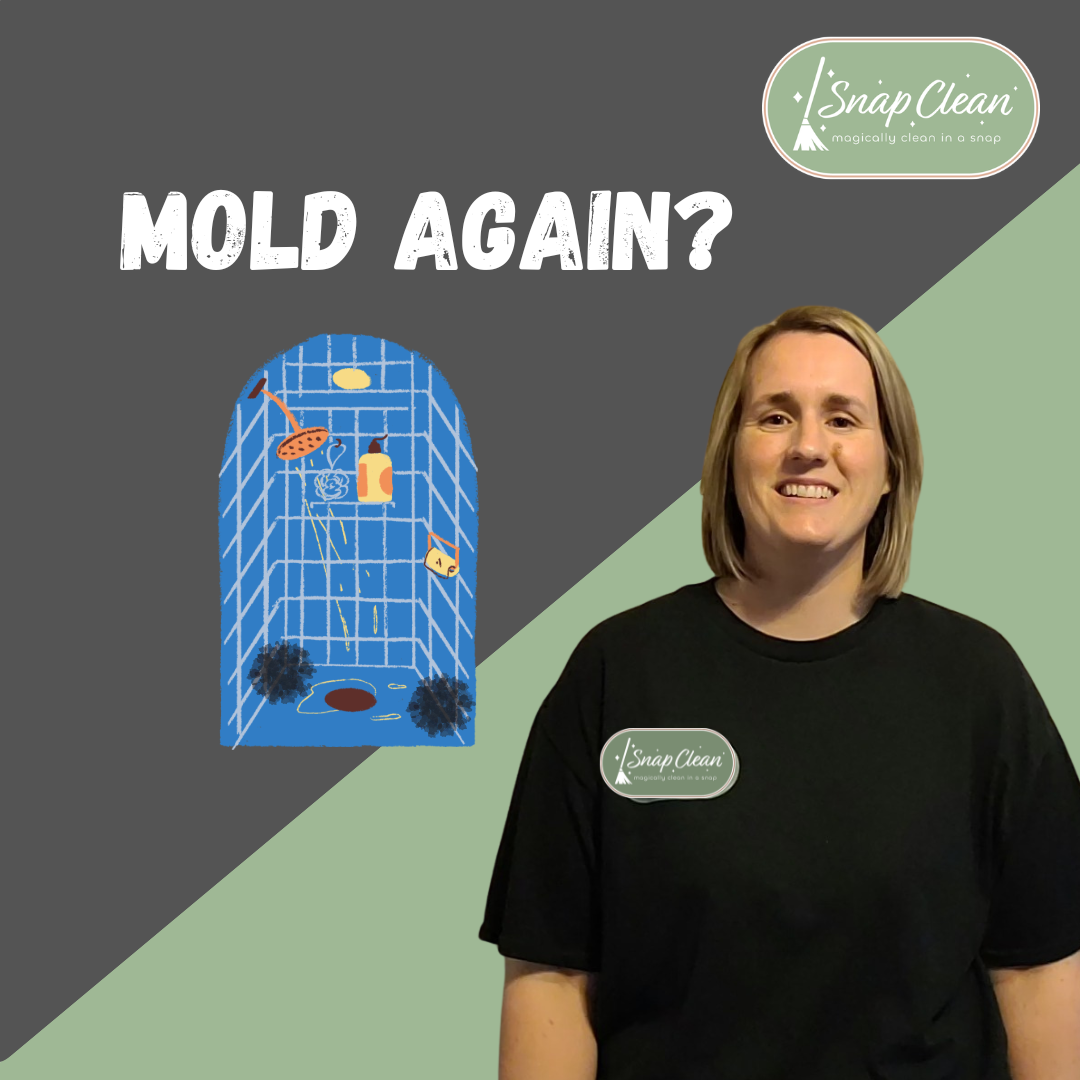
You clean the shower mold, it looks better for a few days, and then it comes back in the exact same spot.
Same corner. Same seam. Same dark line.
If that keeps happening, it can feel like you are doing something wrong. But in many homes across Edmond, Guthrie, OKC, Cashion, and Crescent, the real problem is not always effort. It is usually moisture.
When shower mold keeps coming back, it often means you are cleaning what you can see, but not fixing the condition that keeps helping it return.
That is the part most people miss.
Shower Mold Is Usually More Than a Surface Stain
A lot of people treat shower mold like a stain.
They see a dark line on the caulk, grout, or shower corner. They spray it, scrub it, wipe it, and once the area looks lighter, they assume the problem is handled.
That makes sense because mold often looks like a surface problem.
But recurring shower mold usually works differently. The visible mold is only part of the issue. The bigger issue is often the damp spot underneath the routine.
That means you may be cleaning the mold you can see while the same corner or seam keeps staying damp long enough for the problem to come back.
That is why the shower can look clean at first, then start showing the same dark area again a few days later.
It is not always because the cleaner failed. It may be because the conditions never changed.
Why the Same Spot Keeps Growing Mold
Not every part of your shower dries the same way.
The middle of the shower wall may dry quickly. But a bottom seam, tight corner, grout line, caulk edge, or ledge may stay damp much longer.
Mold does not need the whole shower to stay wet. It usually only needs one area to stay damp often enough.
That is why recurring mold often shows up in patterns:
- The same bottom corner
- The same caulk line
- The same grout seam
- The same shower ledge
- The same edge near the glass or tub
That pattern is a clue.
Instead of only asking, “How do I remove this mold?” it helps to ask, “Why does this exact spot keep staying damp?”
That question gets you closer to the real fix.
If this sounds familiar, you may also notice other “clean but still not fresh” problems around the house. This guide on why your house still smells after cleaning explains how hidden moisture, buildup, and overlooked areas can keep odors coming back too.
The Cleaning Mistake That Keeps the Cycle Going
The biggest mistake is cleaning shower mold like a quick wipe-down.
You spray the area, wipe it fast, and move on because it looks better.
But if the cleaner does not have enough contact time, it may not work as well as it should. And if the area stays damp afterward, the same spot still has the same advantage.
That is the loop:
You clean it.
It looks better.
The area stays damp.
The mold comes back.
You clean it again.
This is why some shower cleaning habits can make the problem feel worse. Not because one wipe causes more mold, but because the same routine keeps you stuck.
It gives you the feeling that you solved the problem, while the real cause stays in place.
The same idea applies to other cleaning problems too. Sometimes the thing that looks clean is still holding residue, moisture, or buildup. That is why we often remind homeowners to be careful with habits that seem helpful but can backfire, like the ones in this post about cleaners that can make your home dirtier.
How to Clean Shower Mold the Right Way
To handle recurring shower mold, you need to do two things:
Clean the mold thoroughly, then take away the moisture advantage.
Start with the exact problem area. Do not just spray the wide area around it. Focus on the seam, corner, grout line, caulk edge, or ledge where the mold always appears first.
Then:
- Use the cleaner according to the label directions
- Let it sit long enough to work
- Scrub the actual problem area, not just the surrounding tile
- Rinse or wipe as directed
- Dry that spot on purpose
That last part matters.
A lot of people clean the shower but never dry the trouble spot. If that corner or seam is where mold keeps coming back, it needs extra attention after cleaning and after regular showers.
At Snap Clean, we see this kind of issue in Central Oklahoma homes all the time. Bathrooms can look clean overall, but one damp seam or corner can keep creating the same frustration.
The goal is not just to make the mold disappear today.
The goal is to stop giving that area the same damp conditions tomorrow.
How to Help Keep Shower Mold From Coming Back
Once the shower is clean, the next goal is simple: help the problem spot dry faster.
You do not need a complicated routine. You just need to pay attention to the area where the mold keeps returning.
Try these simple steps:
- Run the bathroom fan longer after showers
- Leave the shower door or curtain open when possible
- Wipe the problem seam, corner, or ledge dry with a cloth
- Move bottles, razors, or sponges that trap water on ledges
- Watch for caulk that looks cracked, rough, loose, or deeply stained
That last one matters.
If mold keeps coming back quickly in the same caulk line, grout seam, or corner, more scrubbing may not be the answer. The material may be holding moisture, breaking down, or allowing water to sit where it should not.
That does not mean you failed at cleaning. It means the surface may be telling you something.
At that point, replacing old caulk, improving airflow, or fixing a deeper moisture issue may matter more than trying another cleaner.
This is similar to other home cleaning issues where the visible problem is not always the full problem. For example, if you are dealing with lingering bathroom odor too, this post on why your bathroom sink still smells after cleaning explains how hidden moisture and buildup can keep problems coming back.
Ready for a Home That Feels Fresh Again?
If you feel like you keep cleaning the same problem areas over and over, you’re not alone. Bathrooms, kitchens, and high-use spaces can hold onto moisture, residue, and buildup in ways that are easy to miss.
Snap Clean helps families across Central Oklahoma, including Edmond, Guthrie, OKC, Cashion, and Crescent, keep their homes feeling cleaner, fresher, and easier to maintain.
- We focus on the details that are easy to overlook during everyday cleaning
- We use practical methods that help your home feel truly clean, not just quickly wiped down
- We bring a calm, professional approach to the areas that build up fastest
- We help you buy back time while keeping your home more comfortable
📍 Serving Edmond, Guthrie, Cashion, Crescent, OKC, and all of Central Oklahoma.
Recommended Tool
For readers dealing with recurring shower mold, this is one helpful product to look at. Just remember: the cleaner can help treat the mold, but drying the problem area is what helps break the cycle.
✅ Disclosure: As an Amazon Associate, Snap Clean earns from qualifying purchases at no extra cost to you.
FAQ — Shower Mold
Why does shower mold keep coming back?
Shower mold usually comes back because the same area keeps staying damp.
Cleaning removes what you can see, but moisture in a seam, corner, grout line, or caulk edge can keep creating the same problem.
Is shower mold just a stain?
No, recurring shower mold is usually more than a stain.
It may look like a surface mark, but the real issue is often moisture that keeps returning to the same spot.
How do I stop mold from coming back in the shower?
Clean the problem area thoroughly, then help that spot dry faster.
Run the fan longer, leave the shower open, and wipe the trouble seam, corner, or ledge dry after use.
When should shower caulk be replaced?
Shower caulk may need replacing if it is cracked, separating, rough, or deeply stained.
If mold keeps coming back quickly in the same caulk line, the material may be failing instead of simply needing more cleaning.
Quick FAQ Summary
- ✅ Why does shower mold keep coming back? → Shower mold usually comes back because the same seam, corner, or caulk line keeps staying damp.
- ✅ Is shower mold just a stain? → Recurring shower mold is usually a moisture problem showing up on the surface, not just a stain.
- ✅ How do I stop mold from coming back in the shower? → Clean the exact problem area, then dry it on purpose and improve airflow after showers.
- ✅ When should shower caulk be replaced? → Replace shower caulk when it is cracked, separating, rough, or stained deep into the material.