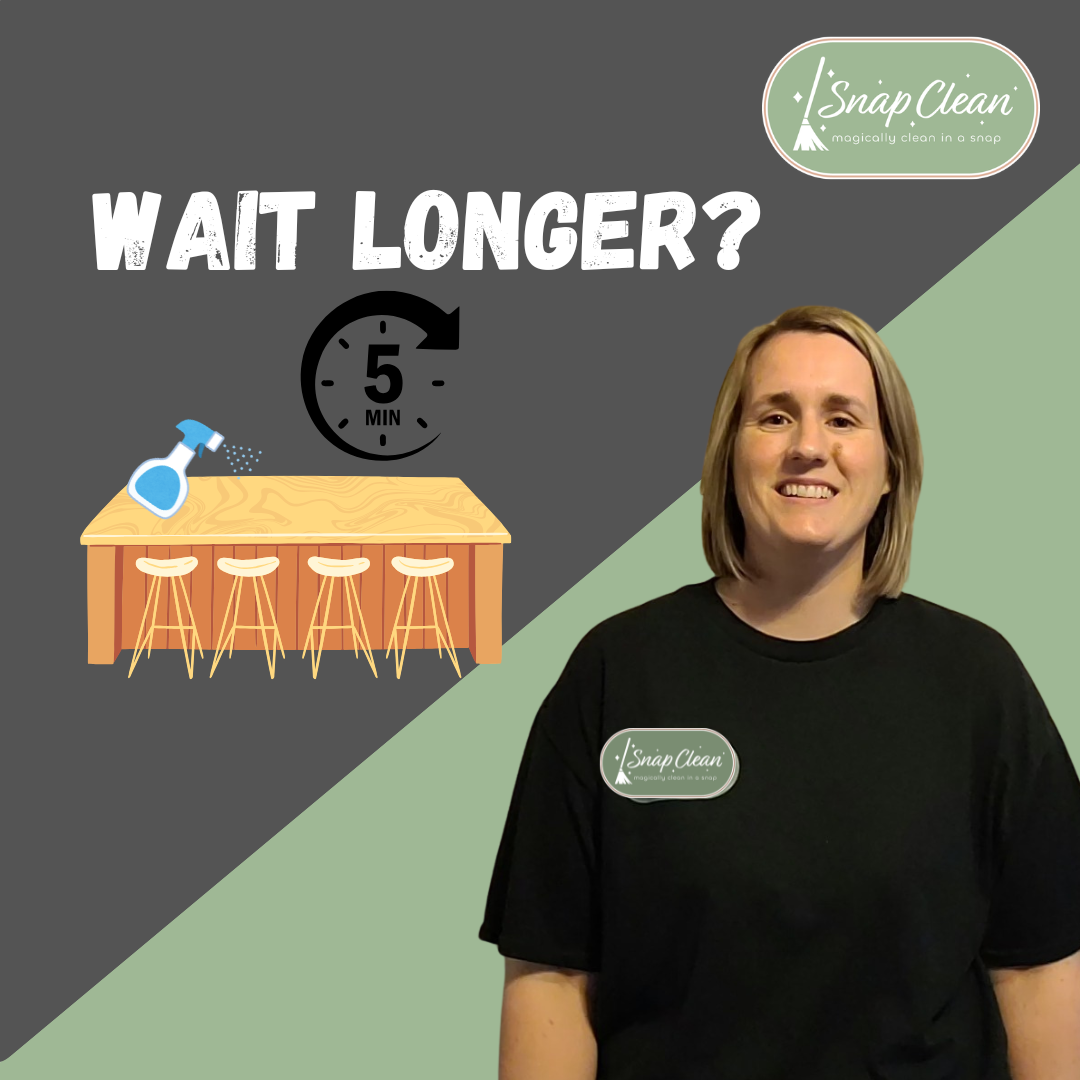
Most of us have done it.
You spray the counter, wipe it right away, and move on. It looks clean. It smells clean. So it feels like the job is done.
But here is the part most people were never taught: wet does not always mean disinfected.
For many homes in Edmond, Guthrie, OKC, Cashion, and Crescent, this is one of the most common cleaning mix-ups we see. People are trying to keep their homes clean and safer, but they are using disinfectant the way they were taught — spray, wipe, done.
The problem is that disinfecting surfaces does not work instantly. Most disinfectants need time to sit wet on the surface before they can actually do their job.
We explain this in our video here:
The Biggest Lie About Disinfecting
The biggest lie in cleaning is simple:
“If I sprayed it, I disinfected it.”
That is not always true.
A surface can be wet, shiny, and smell fresh, but still not be properly disinfected. That is because most disinfectants need something called contact time.
Contact time, also called dwell time, is the amount of time a disinfectant needs to stay wet on a surface to kill germs.
For many disinfectants, that may be:
3 minutes
5 minutes
10 minutes
Sometimes longer, depending on the product
That means if you spray a counter and wipe it off after five seconds, you probably cleaned the surface — but you likely did not fully disinfect it.
This is one of those small details that makes a big difference, especially in kitchens and bathrooms.
Cleaning and Disinfecting Are Not the Same Thing
Cleaning and disinfecting are related, but they are not the same.
Cleaning removes dirt, crumbs, grease, dust, food mess, and buildup from a surface.
Disinfecting kills germs on a surface when the product is used correctly.
A simple way to think about it is this:
Cleaning removes what you can see.
Disinfecting targets what you cannot see.
That is why cleaning should usually come first.
If a counter has food, grease, or cleaner residue on it, disinfectant may not work as well. The product needs to reach the actual surface. If it is sitting on top of grime, it may not do what the label says it can do.
This is also why some cleaning habits can quietly make your home feel less clean over time. If you want to avoid that, you may also like our guide on common cleaning mistakes homeowners make.
Why Wiping Too Fast Can Ruin the Process
Most people wipe disinfectant too fast.
And honestly, it makes sense. We are used to cleaning by wiping things away. Spray, wipe, done. That feels productive.
But disinfecting surfaces takes a different approach.
The disinfectant has to stay wet long enough to work. If the label says the contact time is five minutes, the surface needs to stay wet for those five minutes.
That may mean spraying more than you normally would. It may also mean reapplying the product if it starts to dry too soon.
This matters most on high-touch areas like:
Kitchen counters
Bathroom sinks
Door handles
Light switches
Toilet handles
Faucet handles
Appliance handles
These are the places where hands, food, mouths, and germs often meet.
For example, kitchen surfaces deal with food, spills, hands, and sometimes raw meat or eggs. That does not mean you need to panic-clean everything. But it does mean the right method matters when you are trying to disinfect.
If you are cleaning food prep areas, you may also like our guide on how to clean a cutting board safely.
How to Actually Disinfect the Right Way
The right way to disinfect is simple, but it does require patience.
Here is the basic process:
Clean the surface first.
Remove crumbs, grease, dirt, food, and visible mess.
Spray enough disinfectant.
The surface should stay visibly wet.
Check the label.
Look for the contact time or dwell time.
Let it sit.
Give the product the full time it needs.
Wipe or air-dry.
Follow the product instructions.
The key is not using more chemicals.
It is using the product correctly.
You do not need the strongest-smelling cleaner. You do not need to scrub harder. You do not need to disinfect every surface in your house every single day.
You just need to know when disinfecting matters and how long the product needs to sit.
That is also why we are careful with product use in real homes across Central Oklahoma. A lot of homeowners in Edmond, Guthrie, OKC, Cashion, and Crescent are not doing anything “wrong.” They just have never had anyone explain the difference between wiping and disinfecting.
When You Actually Need to Disinfect
Here is the part that should make cleaning feel less stressful:
You do not need to disinfect everything all the time.
Routine cleaning is enough for most surfaces on most days.
Disinfecting matters more when:
- Someone in the home has been sick
- Raw meat or eggs touched a surface
- A bathroom surface needs extra attention
- High-touch areas have had a lot of use
- Guests have been over
- You are dealing with germs, not just dust or dirt
For normal daily messes, cleaning may be all you need.
This is where some people accidentally go too far. They disinfect everything constantly, use too many products, or mix cleaners that should never be mixed.
That can create strong smells, residue, or even unsafe reactions. If you want to avoid those issues, you may also like our guide on cleaning hacks that can damage your home.
The Product You Use Still Matters
Not every spray is a disinfectant.
Some products are general cleaners. Some are degreasers. Some are deodorizers. Some disinfect. Some do more than one thing, but only when used the right way.
The mistake is assuming all sprays work the same.
They do not.
Before using a product to disinfect, look for:
Whether it says disinfectant on the label
The contact time
What surfaces it is safe for
Whether it needs to be rinsed
Whether the area needs ventilation
This is especially important around food surfaces, natural stone, wood, and delicate finishes.
Products like OdoBan can be helpful in certain cleaning situations, but the label still matters. You always want to use the right product for the right surface and follow the directions.
Residue is another issue. Some cleaners can leave behind a film that makes surfaces look dull, feel sticky, or attract dirt faster. We explain more about that in our guide on cleaners that can make your home dirtier.
What This Means for a Cleaner Home
The big lesson is not that your home is dirty.
The big lesson is that disinfecting has rules.
If you spray and wipe right away, you may be cleaning, not disinfecting. And honestly, that is okay most of the time.
But when disinfecting actually matters, the surface needs to stay wet for the full contact time.
That one small change can make your cleaning routine more effective.
It also takes pressure off. You do not need to disinfect every inch of your house every day. You just need to know when it matters and how to do it correctly.
And if your floors still look dirty even after you mop, the issue may be invisible residue sitting on the surface. You may also like our guide on why floors still look dirty after mopping.
Ready for a Home That Feels Fresh and Truly Cared For?
If you have ever wondered if your home is really getting clean, you are not alone. A lot of people are doing their best, but small cleaning details like contact time, residue, and high-touch areas can make a big difference.
At Snap Clean, we help families across Central Oklahoma keep their homes feeling fresh, cared for, and easier to maintain without making cleaning feel confusing or overwhelming.
- We focus on the details that make a home feel truly clean.
- We use practical cleaning methods that make sense for real homes.
- We pay attention to high-touch areas, buildup, and everyday problem spots.
- We serve busy families with a calm, dependable cleaning experience.
📍 Serving Edmond, Guthrie, Cashion, Crescent, OKC, and all of Central Oklahoma.
Tools We Use
If you are trying to disinfect surfaces the right way, these are helpful tools to have on hand. Just remember: the product only works if you follow the contact time on the label and keep the surface wet long enough.
- Disinfectant Spray Bottle – Good for Everyday Use
- Disinfectant Refill Gallon Jugs – Good for Restocking
- Microfiber Cleaning Cloths
✅ Disclosure: As an Amazon Associate, Snap Clean earns from qualifying purchases at no extra cost to you.
FAQ — Disinfecting Surfaces
Does spraying a surface mean it is disinfected?
No, spraying alone does not always mean the surface is disinfected.
Most disinfectants need to stay wet for a set contact time before they can work properly. If you wipe too fast, you may only be cleaning the surface.
What is contact time?
Contact time is how long a disinfectant must stay wet on a surface.
You can usually find this time on the product label. Many disinfectants need several minutes, not just a few seconds.
Should I clean before I disinfect?
Yes, cleaning first helps disinfectant work better.
Dirt, grease, crumbs, and residue can block the disinfectant from reaching the surface. Cleaning first gives the product a better chance to do its job.
Do I need to disinfect everything every day?
No, most homes do not need every surface disinfected daily.
Routine cleaning is fine most of the time. Save disinfecting for high-touch spots, sickness, food safety concerns, and areas where germs matter more.
Quick FAQ Summary
- ✅ Does spraying a surface mean it is disinfected? → No, a surface usually has to stay wet for the full contact time to be disinfected.
- ✅ What is contact time? → Contact time is how long disinfectant must stay wet on a surface to work correctly.
- ✅ Should I clean before I disinfect? → Yes, cleaning first removes dirt and residue so disinfectant can reach the surface.
- ✅ Do I need to disinfect everything every day? → No, routine cleaning is enough most days, and disinfecting is best saved for high-touch or higher-risk areas.