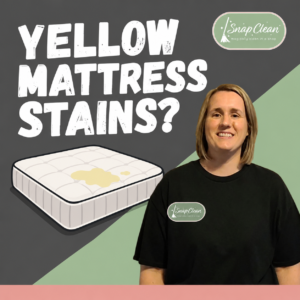
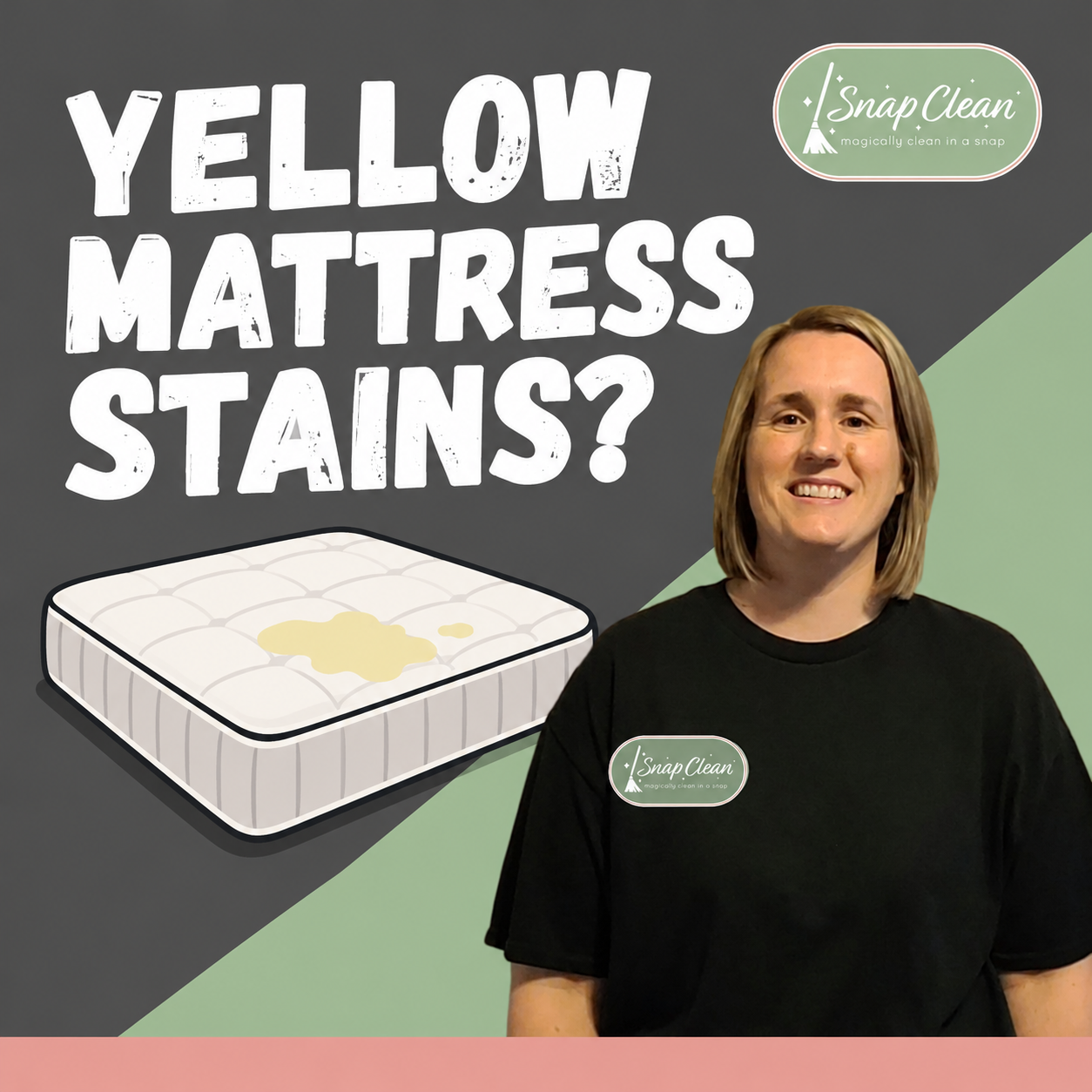
If your mattress has a yellow stain, it may be body oil—the same everyday buildup that yellows a white shirt collar. Your mattress is not automatically ruined. The stain is often the history; the moisture underneath is what deserves your attention now.
You wash your sheets every week and have never spilled anything. So why the yellow? For families in Edmond, Guthrie, and OKC, the answer starts with what a clean sheet can—and cannot—stop.
Why Your Mattress Is Yellow Under Clean Sheets
Cotton is woven to breathe. A sheet is not an oil-proof barrier: sweat and natural skin oil, called sebum, can reach the mattress underneath. Over time, those oils react with air and oxidize, changing from nearly colorless to yellow.
The blotch around your head and shoulders can become a map of where you sleep. That same buildup explains why pillows turn yellow. Foam also yellows with age, so cleaning may lighten an old mark without bringing it back to white. Do not throw out an otherwise good mattress over a cosmetic stain.
Moisture matters more. Unlike sheets, a mattress never goes through the washing machine and can dry slowly beneath bedding. Dust mites absorb moisture from humid air and thrive in damp conditions. Keeping bedroom humidity below about 50% helps discourage them, whether you live in Cashion, Crescent, or elsewhere in Central Oklahoma.
Proteins in dust-mite waste can trigger symptoms in sensitive people. Morning stuffiness may be a clue, but it is not a diagnosis. A faint musty smell can also point to moisture. The stain is history; the damp is something you can address.
Step 1: Strip the Bed and Vacuum
Strip the bed and spend about ten minutes vacuuming the entire surface, including seams. Use a clean upholstery attachment to lift loose skin cells and debris. This is your starting point before treating a stain or adding a cover.
Step 2: Treat the Stain—If You Want To
Remember: the yellow mark may be mostly cosmetic. Check your mattress care instructions first, especially with foam. Use a liquid treatment only if both the mattress and cleaner instructions allow it.
For a fresh stain on compatible fabric, the video’s recipe is 1 cup of 3% hydrogen peroxide, 3 tablespoons of baking soda, and a couple of drops of dish soap. Peroxide helps lighten discoloration; dish soap helps loosen oil.
Test a hidden corner first because peroxide can lighten fabric. Mist lightly rather than soaking, wait about twenty minutes, then blot with a dry towel. Make only what you need, use it immediately, and do not store the mixture in a sealed container. Baking soda does not replace thorough drying.
Years-old stains may respond poorly to peroxide. An enzyme cleaner—the pet-stain kind—may help with organic residue if it is labeled for mattress use. Enzymes target particular stain components, so results vary; old oil does not simply turn into protein.
The video describes lightly dampening the spot, laying a towel over it, and allowing eight to twelve hours. Use that dwell time and towel method only if the product label and mattress instructions permit them. Never flood the foam. Start early, plan another sleeping space if needed, and treat drying as part of the job.
Step 3: Dry It Thoroughly
Do not automatically throw the window open. Humid outdoor air can slow drying. Run the AC or a dehumidifier, keep humid air out, and aim a fan across the mattress surface.
The video suggests checking with the back of your hand: damp fabric may feel cool as water evaporates. That is a clue, not proof the foam is dry. Even after the surface feels normal, allow extra drying time—the video suggests another two hours—and longer if needed. Do not remake the bed until it is completely dry.
Avoid steam-cleaning foam unless its manufacturer permits it. Added moisture can linger deep inside. For a musty mattress, the video suggests drying on two separate days; if odor persists after cleaning, seek further assessment rather than repeatedly spraying it. Surface sprays cannot reliably resolve a deep moisture problem.
Step 4: Zip It—and Do Your Pillows First
Check what is on your bed: does it zip around the entire mattress? A fitted waterproof protector can help with spills, but a full encasement covers the top, bottom, and sides. For dust-mite concerns, choose a zippered allergen-barrier encasement; for oil and moisture protection, check its waterproof specifications too.
If protectors make you hot, look for a breathable membrane instead of a crinkly vinyl backing. Wash covers according to their labels. The video estimates $30–$60 for a mattress encasement; prices vary.
Start with your pillows. Your face rests there all night. Zippered allergen-barrier pillow protectors are the smaller version of the same idea. Check the linked product’s size, quantity, and current price rather than assuming every protector costs the same.
Pull the covers back for about twenty minutes before making the bed, and plan a vacuum-and-air session once or twice a year. Keep washing sheets regularly.
If stuffiness continues, consider other sources such as carpets, vents, or damp areas, and seek advice about ongoing symptoms.
You are not undoing seven years—you are stopping year eight. Lighten the stain if you want, vacuum, dry thoroughly, and protect the bed. Do your pillows first. Next, read why your gym clothes STILL smell after washing.
Ready for a Home That Feels Fresh Again?
If you wash the sheets, make the bed, and still wonder why the bedroom does not feel as fresh as it should, you’re not alone. Keeping up with hidden buildup can feel like one more job on an already full list.
Snap Clean helps families across Central Oklahoma take everyday house cleaning off their shoulders. From Edmond and Guthrie to OKC, Cashion, and Crescent, we’re here to help you reset your home and keep your living spaces cared for with a routine you can maintain.
- An Initial Clean to establish a cleaner starting point for recurring care.
- Weekly or biweekly visits that help you stay ahead of everyday dust and buildup.
- Attention to the household surfaces and details that are easy to miss when life gets busy.
- A local team you can reach to talk through your cleaning needs and find the right service.
Serving Edmond, Guthrie, Cashion, Crescent, OKC, and all of Central Oklahoma.
Tools We Use
For readers dealing with yellow mattress stains, here are the products featured in our video for spot treatment, drying, and protecting your bed. These links make them easy to find—using the right method and drying thoroughly matter more than the brand.
- 3% Hydrogen Peroxide — the 3% strength used in the video’s fresh-stain treatment; test compatible fabric first because it can lighten color.
- Baking Soda — an ingredient in the video’s spot-treatment recipe; use only where the mattress care instructions allow, and remove any residue.
- Enzyme Cleaner — an option for older organic stains when its label allows mattress use; follow its directions for application and dwell time.
- Breathable Zippered Mattress Encasement — covers the mattress on all sides; check the size, depth, waterproofing, and allergen-barrier specifications before choosing.
- Zippered Pillow Protector — the smaller place to start because your face rests on your pillow all night; check the product’s barrier rating and washing instructions.
- Box Fan — helps move air across a lightly treated mattress while it dries; use it with dry indoor air and leave bedding off until fully dry.
Snap Clean Tip: You do not need to buy every stain treatment. Choose a method suited to the stain and allowed by your mattress care instructions. Never put an encasement on a damp mattress—and do your pillows first.
Disclosure: As an Amazon Associate, Snap Clean earns from qualifying purchases at no extra cost to you.
Continue Reading
More Bedroom Cleaning Articles
- Why Do Your Pillows Turn Yellow?
- Why Your Sheets Don’t Feel Clean After Washing
- Why Your Gym Clothes Still Smell After Washing
FAQ — Yellow Mattress Stains
Why does my mattress turn yellow under clean sheets?
Sweat and body oils can pass through sheets and yellow over time.
Oxidation changes oil’s color; foam can also yellow with age.
Will old yellow mattress stains disappear completely?
Older stains may lighten without disappearing completely.
Focus on dryness and protection rather than a perfectly white finish.
How do I dry a mattress after spot-cleaning?
Blot, use a fan and dry indoor air, and leave bedding off until completely dry.
A dry-feeling surface does not prove the foam underneath is dry.
Why start with zippered pillow protectors?
Your face rests on your pillow all night, making it a practical place to start.
Choose allergen-barrier covers and follow their washing instructions.
Quick FAQ Summary
- ✅ Why does my mattress turn yellow under clean sheets? → Sweat and body oils can pass through sheets and yellow over time.
- ✅ Will old yellow mattress stains disappear completely? → Older stains may lighten without disappearing completely.
- ✅ How do I dry a mattress after spot-cleaning? → Blot, use a fan and dry indoor air, and leave bedding off until completely dry.
- ✅ Why start with zippered pillow protectors? → Your face rests on your pillow all night, making it a practical place to start.